Purehire combines AI-driven automation with transparency and human oversight to help companies hire faster, fairer, and more consistently while minimizing bias in every step of...


Can Recruitment Ever Truly Be Bias-Free? A Review of AI Hiring Solutions in 2025
Hiring bias is one of those things few want to acknowledge, yet HR professionals know it exists. Decades of research prove it is both real and persistent. The well-known study “Are Emily and Greg More Employable than Lakisha and Jamal?” found that identical résumés with “white-sounding” names received about 50% more callbacks than those with “Black-sounding” names. A decade later, a large-scale PNAS meta-analysis confirmed the problem hasn’t gone away, showing that hiring discrimination has remained stubbornly stable across time and industries.
These findings echo what many HR teams already sense: bias isn’t occasional. It’s baked into systems, reinforced by habits, and often hidden in blind spots. Even the most seasoned recruiters can fall into shortcuts; gravitating toward familiar names, recognizable schools, or candidates who simply “feel” like a fit. Multiply that across hundreds of hiring decisions, and the funnel inevitably favors similarity over strength.
This is where artificial intelligence enters the conversation. Algorithms can scan thousands of résumés in seconds, flag patterns humans might miss, and create consistency where judgment falters. But left unchecked, most regular AI systems may not erase bias; but easily amplify it. We’ve all seen the headlines: resume-screening tools that favoured men over women, video interview software that penalized candidates with accents, and chatbots that rejected applicants without offering any explanation.
So the real question becomes: where’s the line between AI that helps and AI that hurts? And more importantly, how can HR managers actually use it with confidence? This is the challenge Purehire was designed to solve.
There’s more bias-based research that’s hard to ignore.Over the past year, studies have exposed the risks of “black-box” recruitment AI. A University of Washington experiment found large language models ranking resumes differently based solely on names: white-sounding names were preferred in 85% of cases, while Black male names never ranked higher than white ones. A Brookings Institution review (2025) reached a similar conclusion: AI systems can replicate historical inequities unless actively corrected.
Even more subtle, an Australian National University study showed candidates with non-native accents fared worse in AI interviews - not because of skill gaps, but because speech recognition struggled with their voices. And new research from Cornell University revealed that some models even preferred resumes polished by AI over those written by humans. Imagine that: the machine giving extra credit to its own style.
These findings should make every HR manager pause. If your recruitment stack is built on opaque algorithms, how do you know it isn’t silently filtering out your next star performer?
At Purehire, we took a different approach. We never assumed AI alone could “fix” bias. Instead, we designed the platform to balance automation with fairness and human oversight. Screening, for instance, happens in two stages.
First comes Pre-Screening. Recruiters can set knockout questions — like years of experience, work authorization, or required skills such as Java or Python. As candidates apply, Purehire automatically runs these checks in the background. Qualified applicants pass through, while others are flagged, with clear reasons why. Recruiters get instant clarity without combing through resumes line by line.
The second stage goes deeper. Purehire doesn’t stop at keyword-matching. Instead, it evaluates how a candidate’s skills, experiences, and career trajectory align with the role. The result is a transparent scorecard that highlights both strengths and gaps, giving recruiters a complete view of why someone ranks well. This visibility builds confidence and helps teams prioritize with evidence rather than instinct. And because resumes are only part of the story, Purehire adds a Social Scan, allowing recruiters to review a candidate’s professional presence across LinkedIn, GitHub, portfolio sites, or even public social channels. This extra context validates skills, surfaces achievements that may not appear on resumes, and flags risks early, ensuring decisions are based on a complete picture.
Here’s what that looks like in practice:
The key to Purehire’s approach is transparency. Every recommendation comes with clear reasoning. Recruiters see which skills matched, what experiences aligned, and how candidates scored against requirements. Purehire isn’t a black box; transparency is core. At the same time, human judgment stays central. The platform automates resume triage, scheduling, and structured scoring, while conversations, culture-fit assessments, and final decisions remain with recruiters. Companies get the speed of AI without losing the nuance only humans can bring.
Fairness isn’t a feature; it’s a discipline. Purehire standardizes interviews by default because decades of research show they’re more predictive of performance and fairer across demographics. It continuously tracks pass-through rates by stage and demographic, surfacing patterns before they become problems. Fairness checks can even be customized, ensuring diversity in shortlists without lowering the bar for qualifications.
Candidate experience is another critical piece. Bias doesn’t just appear in decisions — it shows up in silence. Applicants left in a black hole lose trust, especially underrepresented groups. Purehire fixes this with automated updates, clear timelines, and transparency at every step. Candidates always know where they stand. And it matters: a recent study found that 66% of candidates said process clarity directly influenced their decision to accept an offer.
In practice, this means better outcomes. Instead of spending days manually filtering resumes, Purehire ingests applications, masks identifiers, scores candidates, and generates a transparent shortlist in minutes. Recruiters evaluate consistently with structured templates, while candidates get timely updates. HR leaders can even run fairness audits with real data.
The result is more than speed. It’s trust, reduced costs, and confidence that invisible bias isn’t costing companies their best talent. In 2025, the companies that stand apart won’t just hire fast - they’ll prove they hire fair. Purehire makes that possible!
Explore our latest articles, guides, and industry updates designed to help you grow smarter and scale faster.

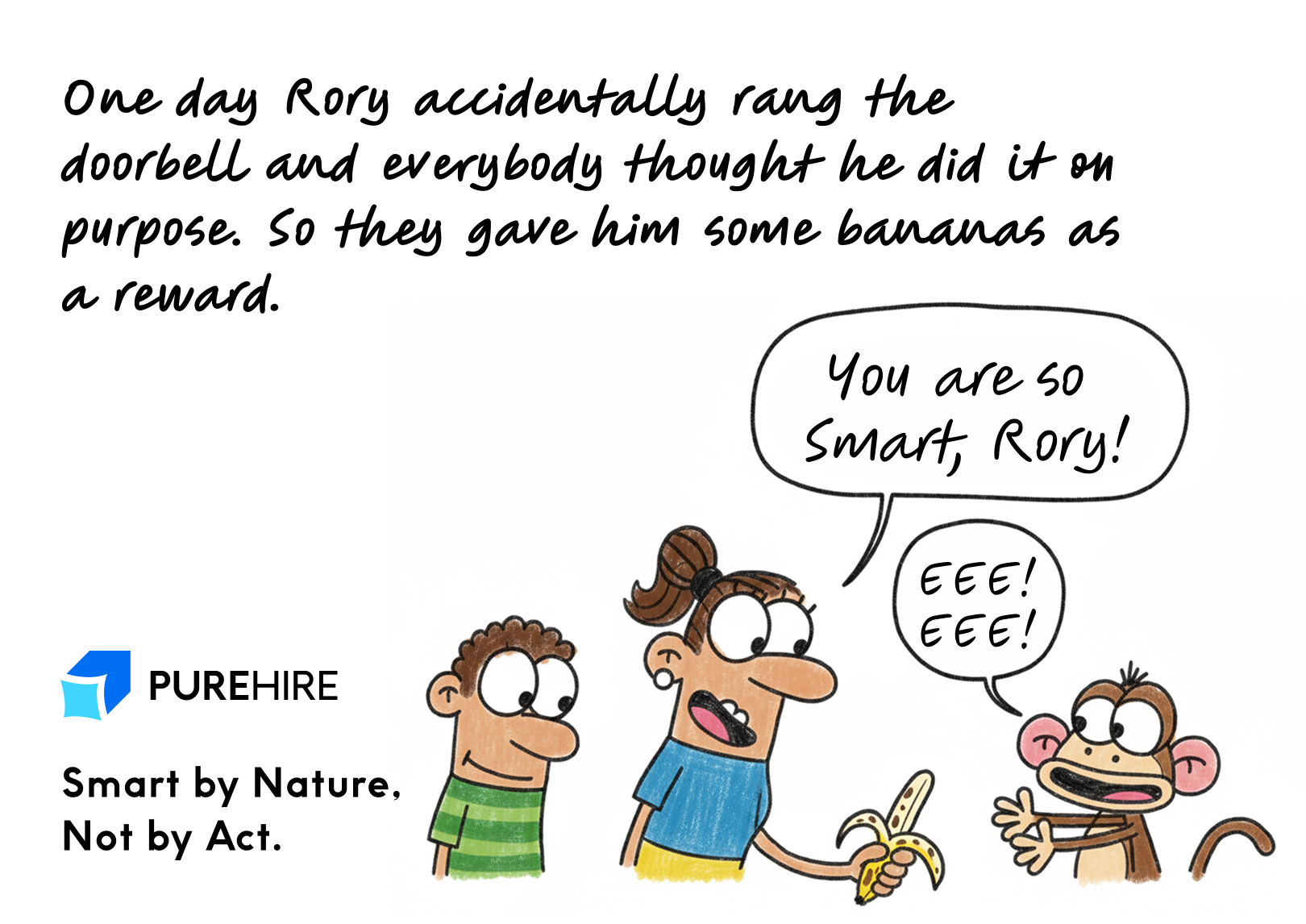
Imagine a monkey in a lab coat tapping on a keyboard. Funny, right? He looks smart, but he doesn’t really know what he’s doing. That’s how most recruitment tools work.

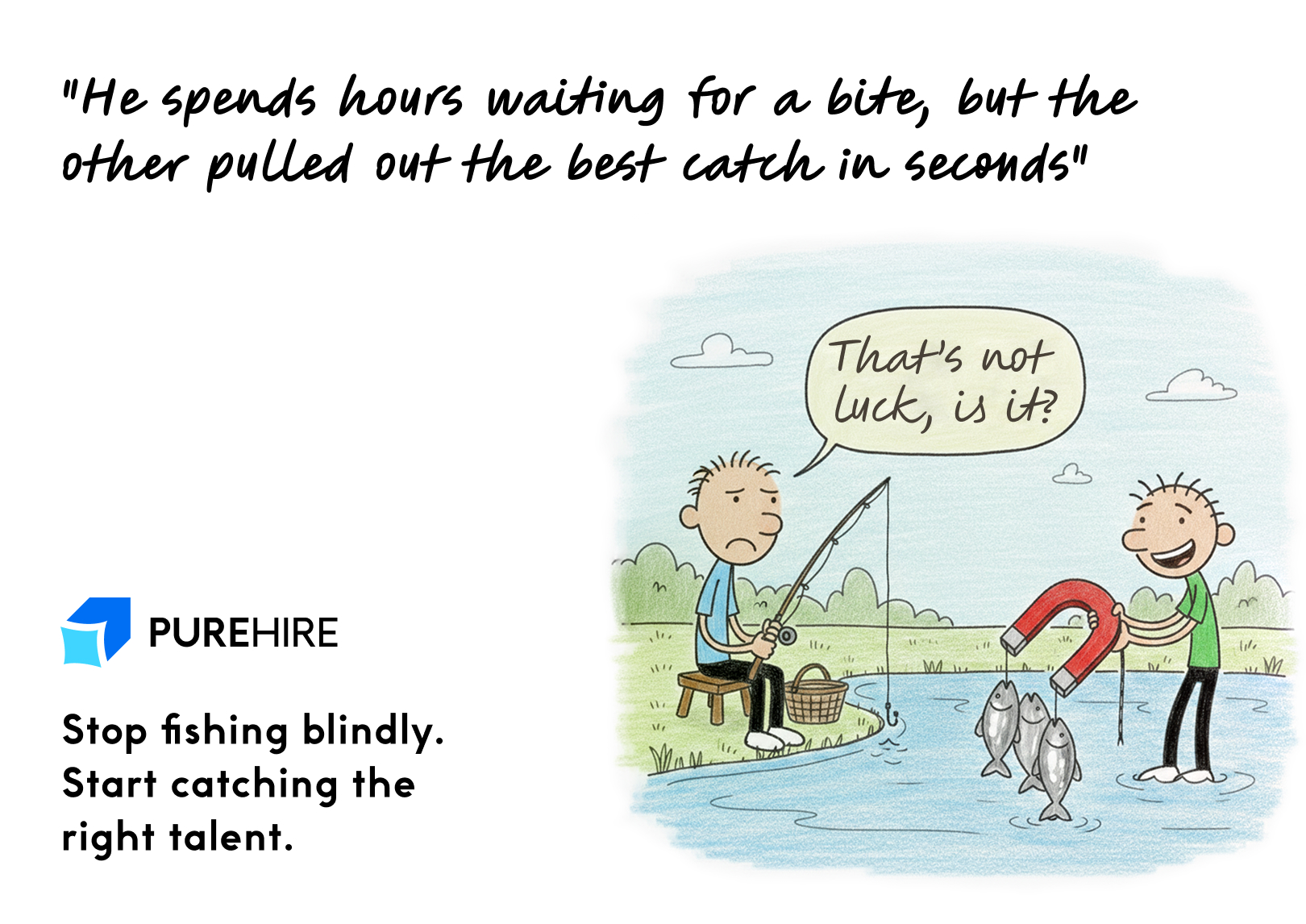
Discover how Purehire’s AI hiring manager speeds up and simplifies recruitment. See how automated candidate screening outperforms traditional methods.
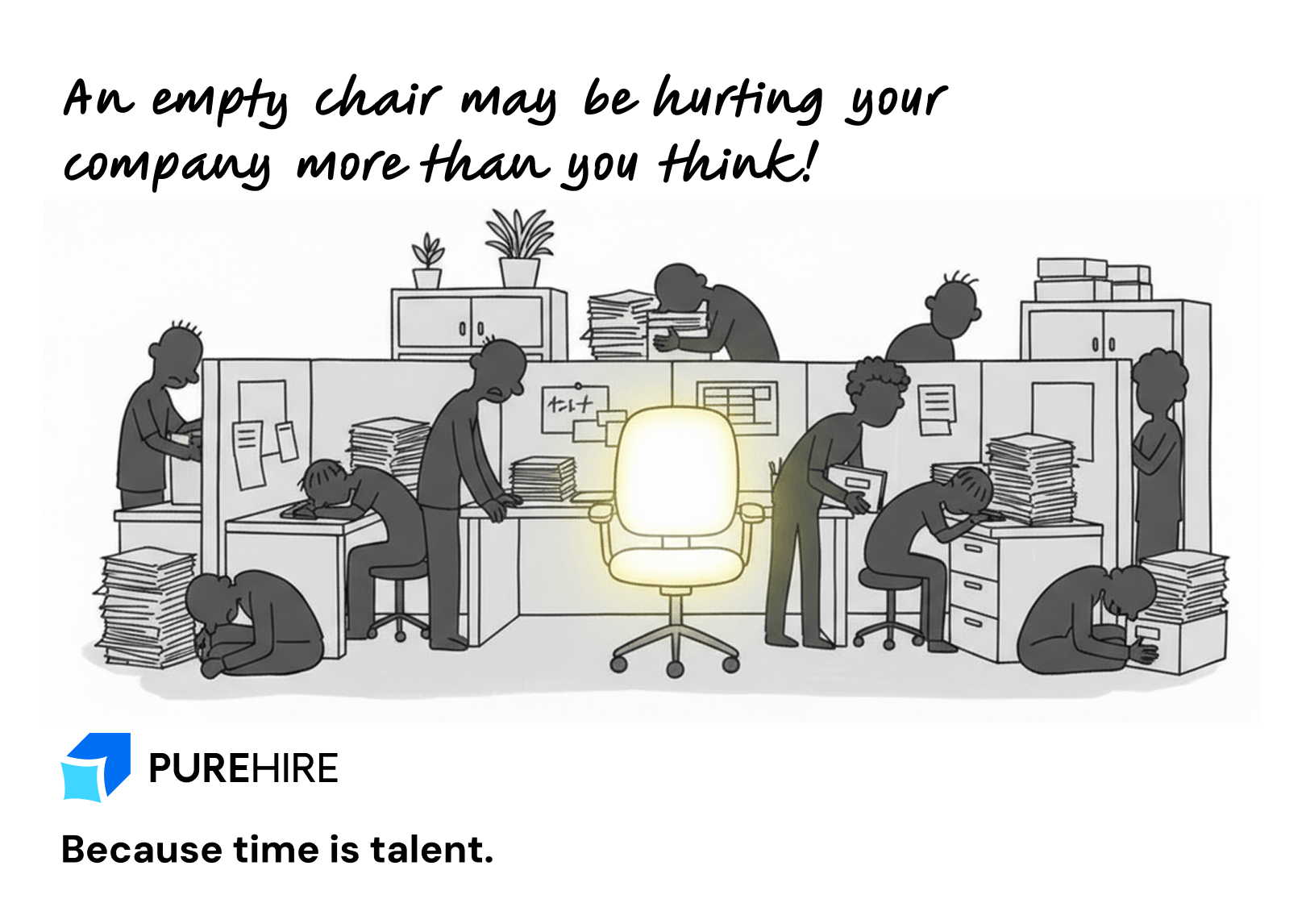
Learn how hiring delays impact productivity, morale, and growth - and how faster, smarter recruitment can help you secure top talent before your competitors do.

Plug in your ATS, HRIS, job boards, and calendars in minutes. Enterprise-grade security ensures your candidate data is always protected.



Making hiring effortless with AI


